A plain-language guide to the people who assess, design, install, and certify on-site wastewater systems in British Columbia.
ROWP shows up on septic proposals, real-estate reports, and health-authority forms all over British Columbia. Most property owners never learn what the letters mean until a system fails or a building project stops at the septic question.
ROWP stands for Registered Onsite Wastewater Practitioner. Registration is administered through the Applied Science Technologists and Technicians of British Columbia. A ROWP holds one or more endorsements, and those endorsements describe the work the practitioner is registered to perform. The endorsement is the part worth reading closely.
What a ROWP Planner does
ASTTBC describes the Planner as responsible for assessing site and soil conditions, designing the system, reviewing construction, and certifying that construction. Planning starts well before anyone picks a tank or a field type.
The Planner studies the proposed building use and the expected sewage flow. On the property, the work can include test pits, soil description, permeability or percolation testing, elevation work, setback review, and an assessment of seasonal groundwater. The finished design has to account for the site’s capacity to accept and treat effluent without creating a health hazard.
A plan is more than a sketch of a tank and a field. It should define the treatment method, component sizes, elevations, distribution method, construction specifications, setbacks, and everything the Installer needs to build the system as intended.
What a ROWP Installer does
The Installer is responsible for the physical installation and repair of on-site wastewater systems, according to specifications prepared by a ROWP Planner or a qualified Professional.
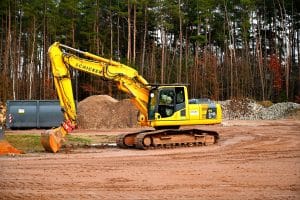
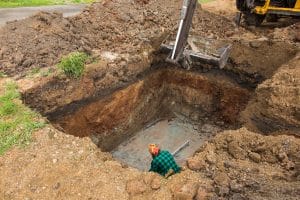
That work can involve excavation, tank placement, bedding, piping, pumps, controls, treatment units, and construction of the dispersal area. It also involves protecting the soil the whole design depends on. Driving over a wet dispersal area, or smearing it, can ruin it before the system ever runs.
When the ground doesn’t match the plan, the Installer’s job is to raise it with the Planner. A buried utility, shallow rock, groundwater, or soil that differs from the test area may force a change. What it should never get is a quietly relocated component and a record drawing that’s expected to catch up later.
Why some practitioners hold both endorsements
I hold Planner and Installer endorsements. On GroundStone projects, that keeps the design reasoning close to the construction work. If excavation exposes something that needs review, I can assess it from both sides of the job.
That doesn’t remove the need for records or construction checks. It makes them more direct. The system still has to be installed substantially in accordance with the filed plans, and material changes still have to be documented through the proper process.
When a Professional is required
The Sewerage System Regulation sets limits on work that can proceed without supervision by a Professional. A person must not construct or maintain a Type 3 system without Professional supervision. The same restriction applies to a system designed for an estimated minimum daily domestic sewage flow above 9,100 litres.
Large or technically complex projects can also bring in engineers, geoscientists, hydrogeologists, structural professionals or other specialists for work within their fields. A good project team identifies those needs early, not after the design is committed. If you are weighing whether your project needs an engineer or a ROWP, we cover that decision in a separate post.
Filing is not the same as a municipal permit
BC’s regulation uses a filing model for sewerage systems within its scope. Before construction, the Authorized Person files information, plans, specifications, and written assurance with the health authority. Holding tanks follow a separate permit process under the regulation.
A municipality or regional district may layer on its own requirements: building permits, development permits, zoning, covenants, floodplain conditions, electrical work, road access. The health-authority filing doesn’t automatically satisfy every other approval connected to the property.
Certification closes the construction record
For a filed sewerage system, the Authorized Person completes the certification steps after construction. The regulation calls for the owner to receive the plans and specifications, a maintenance plan, and a copy of the certification. The health authority receives the signed certification, the as-built plan, and the maintenance plan.
The regulation sets a 30-day period after construction for that work. Ask when your package will be delivered, and store it with the property records. You will need it long after the contractor is gone.
Questions to ask before hiring a ROWP
- Which endorsements do you hold, and are there conditions on your registration?
- Who will perform the site and soil assessment?
- Who will prepare and seal the design?
- Who will review the work during construction?
- Who is responsible for the health-authority filing and final certification?
- Will I receive an as-built plan and maintenance plan?
- Does this project require a qualified Professional or another specialist?
Clear answers at the start prevent a gap between design, installation, and certification. That gap is very difficult to fix after the excavation has been backfilled.
A holding tank requires a permit because it stores untreated sewage until it can be pumped out and hauled away, so an Environmental Health Officer must review and approve the proposal before installation.
A Record of Sewerage System, on the other hand, is filed by an Authorized Person before constructing a system that treats and disperses wastewater onsite.
Once that system is complete, the Authorized Person files a Letter of Certification confirming it was built substantially as designed, and provides the owner with an as-built drawing and maintenance plan. Holding tanks do not normally require this letter because their installation and use are governed by the conditions of the permit.
Luis Goncalves, ROWP, IN, PL