Cold weather and long distances do not change the design standard. They change how carefully the project has to be prepared.
A fitting that’s ten minutes away in West Kelowna can be half a day away from a northern job. A replacement float, a specific valve, the right length of pipe. Any one of them can decide whether the crew keeps working or waits.
Remote septic construction carries the same technical obligations as local work. The difference is that small planning mistakes get expensive very quickly.
Design for the site, then plan for the distance
The property still comes first. Soil, seasonal groundwater, topography, setbacks, daily flow, and access determine the system. Once the design is settled, the project needs a mobilization plan that follows the sequence of construction.
Tank delivery has to match excavation. Crane timing has to match the prepared base. Aggregate volume has to allow for waste and field conditions. Pipe, fittings, controls and spare parts get checked against the drawings before anything is loaded.
GroundStone’s northern experience
Onsite Installer reported on GroundStone’s BC-wide service area and our projects near Fort Nelson, roughly an 18-hour drive from our base. Some complex jobs have kept the crew away for weeks at a time.
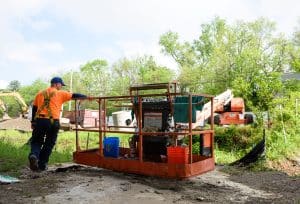
We grew in the north largely through word of mouth. To stay competitive at that distance, we built relationships with BC suppliers and learned to carry more of the project with us: excavators, transport, tools, pipe, controls, and the small items that are easiest to overlook.
Cold changes the work sequence
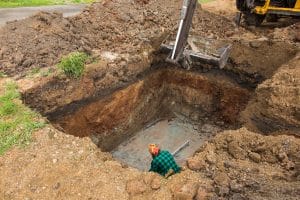
We’ve worked in temperatures near -25 C and through heavy snowfall. Frozen ground changes excavation and bedding. Snow hides the prepared surface, the survey marks, and the stored material. Tanks and pipe have to be handled with the manufacturer’s temperature limits in mind.
The schedule should protect the soil and the open excavation from the weather. Backfill may need to be stored or sourced so it stays workable. Pumps, controls, and treatment equipment need dry, secure handling, and crew travel has to account for road conditions and short daylight.
Cold-weather work should never lean on speed. Rushing tank bedding or pipe grade because a storm is coming leaves a permanent problem underground.
Equipment reliability is part of the scope
Remote mobilization puts long highway hours on trucks and trailers before the excavator ever starts. Preventive maintenance, inspections, and load planning reduce the odds that the project stops because of the equipment used to reach it.
The same thinking applies to the installed system. Components should be serviceable with tools and parts the owner or maintenance provider can actually get. Where response times are long, alarm clarity, spare parts, and operating instructions deserve extra attention.
Information that improves a remote quote
- Exact location, access route, road restrictions, and seasonal access limits.
- Site plans, surveys, geotechnical information and available septic records.
- Power supply, water source and communication availability.
- Accommodation, secure equipment storage and working-hour restrictions.
- Local sources for aggregate, water, fuel, crane service and waste disposal.
- Required orientations, safety programs and owner procurement rules.
- Expected occupancy, operating season and future expansion plans.
A realistic remote-project proposal
A useful proposal separates the permanent system cost from mobilization and location-specific logistics. It states its assumptions about local material, crane access, power, accommodation, and the number of planned trips.
That clarity gives the client options. Sometimes local aggregate or trucking brings the cost down. Other times, hauling the right material from the south beats the risk of receiving a substitute that doesn’t meet the design specification.
For a camp, lodge, industrial property, or northern residence, send the location and the project information you have before asking for a fixed number. The first task is figuring out what can be sourced locally, what has to travel with the crew, and what the site will demand when winter arrives.
With projects as far from home as 1,500 km and 15- to 18-hour drive times, ranging all the way up to Fort Nelson, BC, careful planning is top of mind.
In remote areas, we cannot count on certain supplies and materials being readily available. Bringing sufficient supplies of pipe, fittings, panels, pumps, risers, lids, and many more components is vital to completing a project on budget and on time. We now carry more than we need, and it has paid off.
Equipment is often rented, as the cost of transport is expensive for long hauls. With shorter trips, we can mobilize equipment and supplies without expenses getting out of control. Planning the equipment to arrive on site, along with aggregates and trucking, always takes a strong planning strategy. Otherwise, a project can get stagnated, and costs can run up daily without anything being accomplished.
Accommodation can sometimes be a challenge, especially in highly remote areas. Normally, hotels, cabins, Airbnb, and even tents fit the bill for what we need to do on a job site.
Top-quality workmanship is always top of mind. We never want to do anything twice, and we certainly don’t want to travel that many hours back if there is a deficiency. That is why workmanship quality is the most important thing to us. We have been in business a long time, and it is due to that exact mindset of solid workmanship.
Luis Goncalves, ROWP, IN, PL