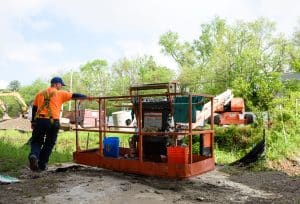
The buyer did this one right. Before signing the final documents on a rural Kelowna home, they booked a septic inspection, and not the look-down-the-cleanout kind, the full version. What we found didn’t kill the deal. It gave the buyer a number, and numbers are what you negotiate with.
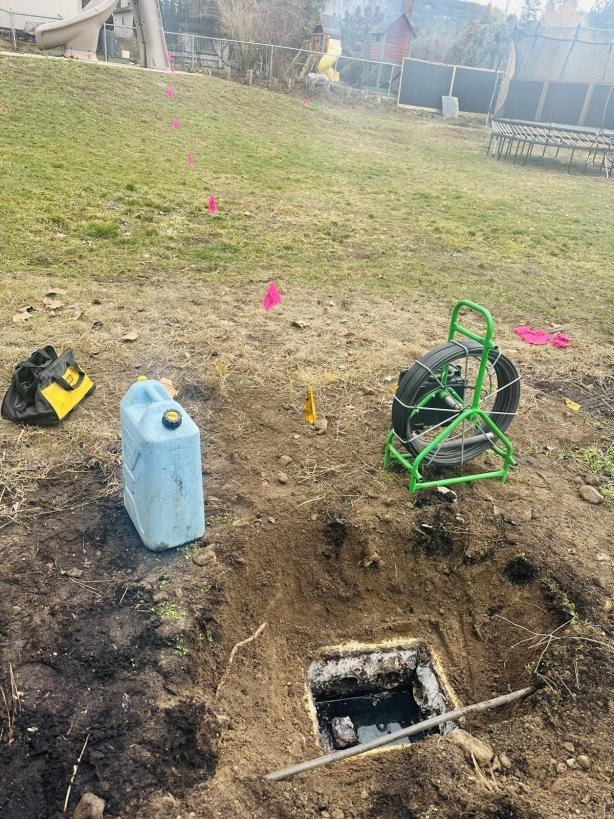
Camera reel set up at the opened distribution box, lateral lines flagged up the yard.
Start at the tank
We pumped the tank first, because you can’t inspect what you can’t see, then ran the camera in. Good news first: the tank itself was in fair to good condition. No cracks, no signs of leakage, and both baffles, the fittings that keep solids from escaping toward the field, were in fair to good shape. Plenty of buyers would stop there and call it a pass. The tank is maybe a third of the story.
Follow the flow
Next, the camera went down the drain line from the tank toward the distribution box. That’s where the story changed. The line was bowed, settled into a sag, and it was holding bio matter that should have been flowing through, not sitting in the pipe.
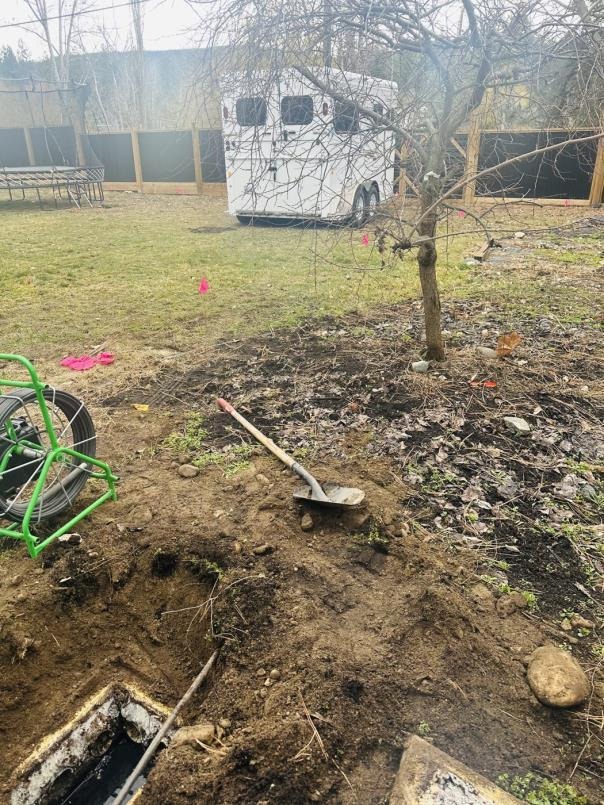
Locating and exposing the system, flags marking what the camera found.
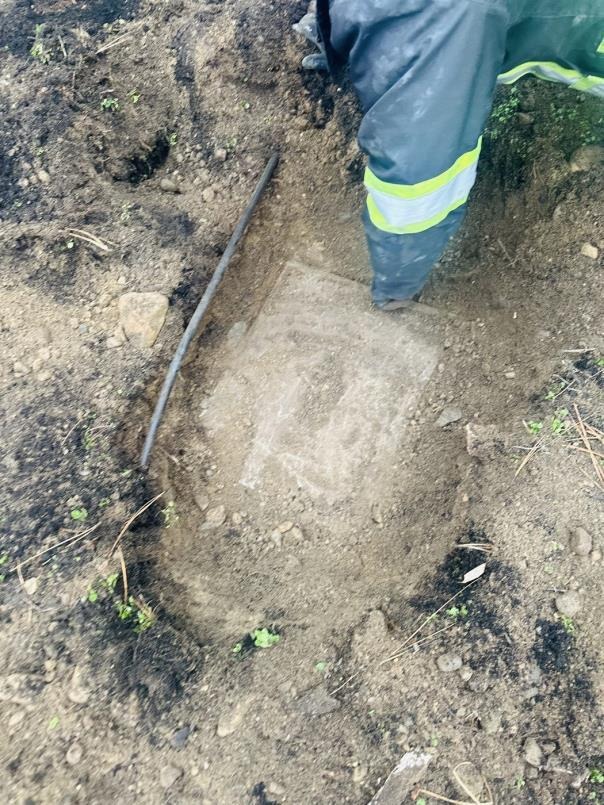
Hand-digging to expose the buried distribution box lid.
The distribution box told the rest
We located and opened the d-box, the small chamber that’s supposed to split flow evenly into each lateral line of the field. If you’ve never seen yours, our guide on how to find your septic tank shows what’s involved. Inside this one was sludge buildup deep enough to choke off flow into some of the laterals. The box itself was no longer sitting level either, so the lines it did feed were getting uneven doses. A d-box costs a few hundred dollars in parts. Out of level and full of sludge, it quietly wrecks a field worth tens of thousands.
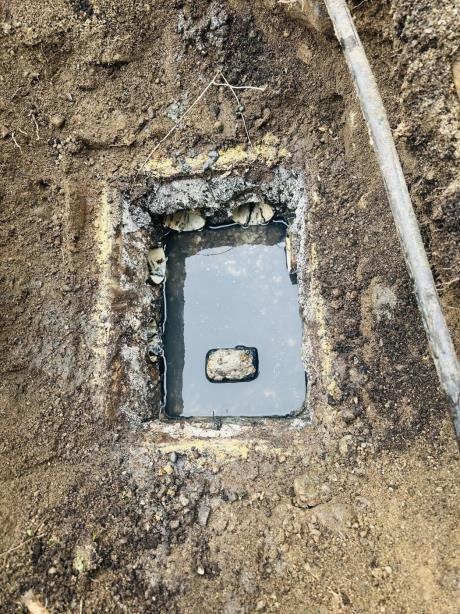
First look inside the distribution box before cleaning and further checks.
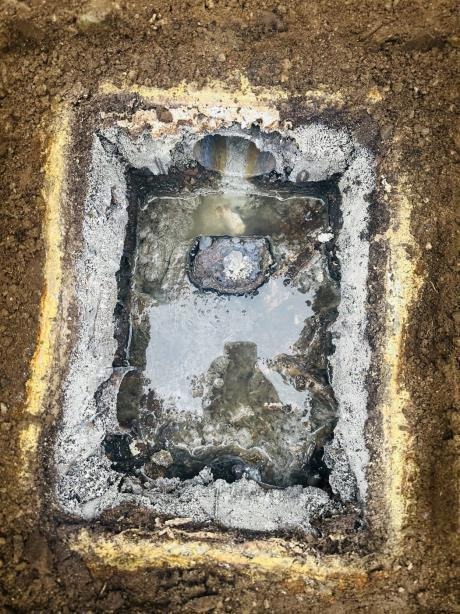
Sludge buildup choking flow to some of the lateral lines.
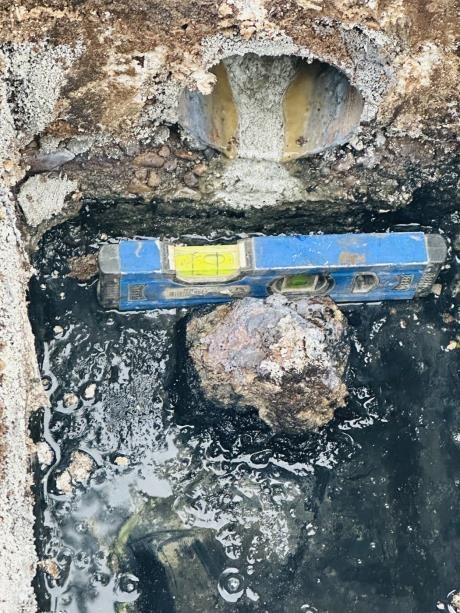
The level tells the story, the box has settled out of level.
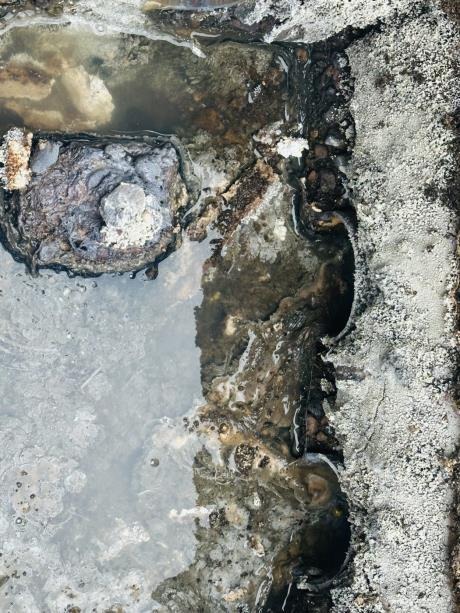
Buildup around the distribution box outlets, where the field lines connect.
Walking the field
We located the lateral lines and flagged them, then inspected what was accessible. Some lines were bowed and holding effluent and matter. The lines closest to a large tree couldn’t be inspected at all, root matter blocked the way, and that’s a finding in itself. Some accessible lines were dry during the inspection. Together with the blockage and the uneven d-box, that pointed to a field that wasn’t sharing the flow properly. A field only lasts when every line shares the work, and this one had a few lines doing all of it.
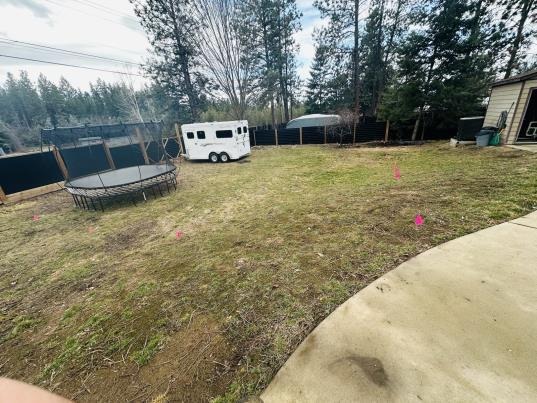
Lateral lines located and flagged across the back yard.
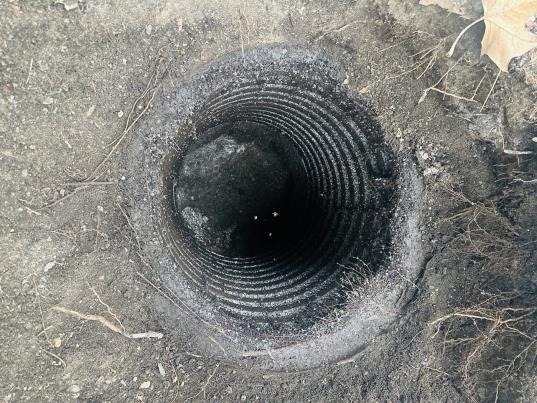
A dry monitoring port during the inspection; one finding in the wider field assessment.
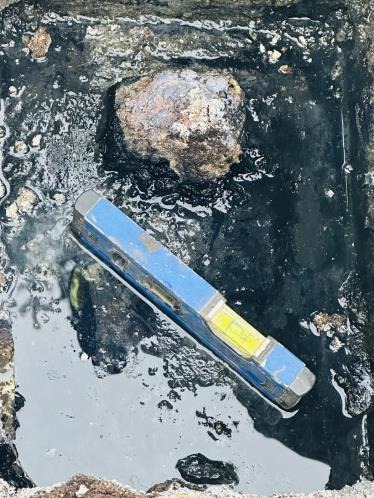
Checking the distribution box in a second direction.
The verdict
Fair condition, with life left in it, and that’s exactly what the report said. No drama, and no condemning a system that doesn’t deserve it. But the sagging tank-to-box line, the sludged and unlevel d-box, and the starved laterals went into the written inspection report as necessary repairs, with the total fix in the range of $5,000.
Why this is the happy ending
The buyer walked into the final signing knowing exactly what the system was, what it needed, and what that costs. That’s five thousand dollars they could negotiate or budget, instead of finding it the hard way, one backed-up weekend at a time, after the keys changed hands. And once you own the system, its care is on you, that’s how BC’s Sewerage System Regulation works, so knowing its condition on day one matters. A tank that looks fine is not a system that is fine. The problems on this property lived past the tank, in the parts a casual look never reaches.
Buying on septic in Kelowna or anywhere in the Okanagan? Book the inspection before subjects come off, or call (778) 363-0828 with the address and your dates.
Luis Goncalves, ROWP
GroundStone Onsite Wastewater Services