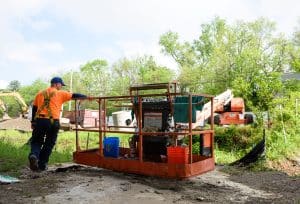
The property decides what is possible. Soil, groundwater, slope, and usable area have to be understood before a system is selected.
Two neighbouring properties can need two different septic systems. One test pit shows deep, structured soil that takes water at a useful rate. The next exposes clay, shallow bedrock, or the telltale signs that water sits above a restrictive layer all wet season.
That’s why a product catalogue can’t design a septic system. The design has to begin in the ground.
Clay changes how water moves
Clay isn’t one simple material. Structure, consistency, mineral content, and moisture condition all affect how it passes water. Some clay-rich soils shrink when dry and swell when wet, and as they swell, the pathways allowing the effluent to move through can close down to very little.
That’s also why a quick test in dry soil can mislead a designer. If the soil hasn’t been saturated long enough to reach a stable condition, the numbers look better than the ground really is. The BC Standard Practice Manual warns that clay-rich soils need adequate pre-soaking and enough testing time to establish a stable rate.
The design criteria depend on the whole soil profile. It might mean a different infiltrative surface, a larger basal area, pressure distribution, imported sand, a raised system, or treatment that reduces the strength of the effluent before dispersal. And sometimes the site simply rules out the option the owner was hoping for.
Seasonal groundwater may not be visible on a dry day
A test pit opened in August can be bone dry while the same soil holds water through spring snowmelt or a long wet stretch. Planners look for soil colours and redoximorphic features that point to periodic saturation. On higher-risk sites, observation wells or standpipes can be monitored to understand the seasonal high water table.
Vertical separation is the unsaturated soil or treatment media between the infiltrative surface and a limiting condition such as groundwater, restrictive soil or rock. It gives the system room to treat effluent before it reaches that layer. Where natural separation is limited, the design may raise the infiltrative surface with suitable media, if the site can support that approach.
Slope affects more than excavation
On a slope, the Planner has to think about where effluent goes after it enters the soil. Load too much water into a short section of hillside, and it can contribute to seepage or breakout farther down. The receiving area below the field matters as much as the field itself.
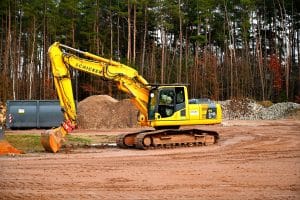
A contour-based layout, timed dosing, pressure distribution, reduced linear loading, or a longer and narrower field may be the answer. The right one depends on the soil and the geometry. Excavator access matters too, because the construction method must not damage the very area the design depends on.
Small lots leave less room for error
A tight property has to hold a house, a well, a driveway, retaining walls, utilities, property-line setbacks, water setbacks, and a reserve area. What’s left over can be an awkward shape even when the total area looks fine on a map.
Advanced treatment can sometimes shrink the dispersal footprint or help meet treatment objectives, but it adds equipment and maintenance, and it should be solving a real site problem. Installing an aerobic unit does not erase setbacks, groundwater conditions, or poor soil.
The path of least complexity
At GroundStone, we work from the simpler options outward. If a Type 1 system can safely fit the property and meet the applicable standard, there’s no sense adding treatment equipment for appearance. If the site can’t support that approach, we move to the next level that addresses the actual constraint.
That decision affects purchase cost, electrical use, maintenance, replacement parts, and the owner’s responsibilities for years to come. The owner should understand why every component exists.
What to expect from a difficult-site assessment
- A review of the proposed building use and expected sewage flow.
- Test pits deep enough to identify soil horizons and limiting conditions.
- Permeability or percolation testing suited to the soil and season.
- Elevation and topographic work where slope or drainage affects the design.
- A setback review using available survey, title and site information.
- Discussion of system options, maintenance needs and the reason for the recommendation.
A difficult site doesn’t always mean an elaborate system. It does mean the investigation deserves time. The cost of that work is small next to building a field in the wrong soil or at the wrong elevation.
Sites with a high water table can sometimes be difficult to read if a practitioner does not have enough experience in soil work.
On one occasion I took over the soil work from another contractor. That contractor had identified the soil as permeable with no signs of a water table or saturated seasonal conditions, which meant a conventional gravity septic system was going to be the choice according to them.
Once I excavated my own test pits, I determined that the soils were not that permeable, and there were significant signs of a seasonal water table. I left the test pit overnight, and when I came back the next day it was completely full of water, from 5 feet down right to 1 foot below grade.
If the homeowner had moved ahead with the conventional gravity system, they would have been in a state of malfunction immediately, while contaminating the groundwater. I designed and submitted the necessary documents for a sand mound septic system. There is much more information on my blog regarding these systems.
Luis Goncalves, ROWP, IN, PL