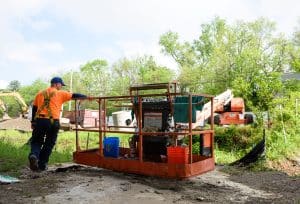
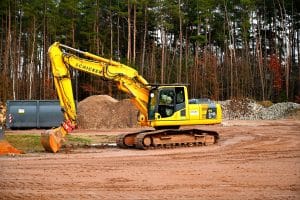
The word ‘best’ is easy to put on a website. Qualifications, site work, and documentation give a property owner The word ‘best’ is easy to put on a website. Qualifications, site work, and documentation give a property owner something real to compare.
People search for the best septic company in BC every day. Google will return a list. What it can’t do is stand beside a test pit, read a soil profile, or tell you whether a quote leaves out the work needed to finish the field.
A septic system is a long-term part of the property. So the better question is this: which contractor is qualified for this particular site, can explain the proposed system in plain terms, and will leave you with a complete record when the work is done?
Start with the person’s registration, not the company slogan
British Columbia uses the term Authorized Person. For many residential Type 1 and Type 2 projects, that person may be a Registered Onsite Wastewater Practitioner, commonly called a ROWP. ROWPs hold specific endorsements, and the endorsement determines the work they’re responsible for.
- A ROWP Planner assesses site and soil conditions, prepares the design, reviews construction and certifies the completed system within the permitted scope.
- A ROWP Installer physically installs or repairs a system according to plans prepared by a Planner or qualified Professional.
- A Maintenance Provider maintains systems according to their maintenance plans.
- A Private Inspector assesses existing systems, often for property transactions or building applications. ASTTBC also permits Planners and Maintenance Providers to perform private inspections within its stated rules.
Ask for the practitioner’s name and registration category, then check the ASTTBC directory yourself. Don’t assume a general excavation contractor, plumber, or pumping company is registered to design or install the system you need. Registration is specific, and it’s easy to verify.
Find out who is responsible for the design
Some companies install from a design prepared by someone else. Others carry planning and installation under one contract. Either arrangement can work, but the responsibility has to be clear before the machine shows up.
Ask who will complete the site and soil assessment. Who prepares and seals the plans? Who files with the health authority, and who reviews the installation? And if the design changes after excavation begins, who has the authority to approve and document that change?
A low installation price gets expensive fast when planning, aggregate, electrical work, trucking, crane service, treatment equipment, controls, or final documentation show up later as separate costs.
Expect the contractor to talk about the property
A serious proposal reflects the site. Soil texture and structure, permeability, seasonal groundwater, slope, available area, setbacks, access, and the intended daily flow all shape the design.
Be cautious when a contractor recommends a particular tank or treatment unit before collecting enough information. Equipment matters, but it doesn’t replace a site assessment. The least complicated system that safely fits the property is usually the sensible place to start.
Compare scopes before comparing totals
Put the quotes side by side and mark what’s actually included. A useful comparison covers far more than the tank and machine time.
- Site investigation, soil testing, survey work and design documents.
- Health-authority filing and applicable local permits or coordination.
- Tanks, treatment equipment, pumps, panels, alarms, piping and field components.
- Excavation, imported aggregate, disposal of unsuitable soil and site access protection.
- Electrical, crane, trucking, traffic control or other subcontracted work.
- Construction review, commissioning, record drawings, certification and maintenance plan.
- Surface restoration, landscaping limits and responsibility for settlement after construction.
Allowances should be identified as allowances. Exclusions should be written in plain language. If you can’t compare a quote without a long phone call, ask for the scope in writing.
Ask for work that resembles your project
A conventional rural installation is not a tight lakefront lot, a commercial kitchen, a steep driveway or a northern project that needs a full mobilization. Ask for examples that share at least one major condition with your property.
Photographs are most useful when they show the work below grade: tank bedding, pipework, laterals, treatment equipment, and construction checks. Anyone can photograph a finished lawn.
Understand what you should receive at completion
Under the BC Sewerage System Regulation, the authorized person carries filing and certification duties. For a system covered by the filing provisions, the owner should receive the plans and specifications, a maintenance plan, and a copy of the certification submitted to the health authority. The certification package includes a plan showing the system as it was actually built.
Keep those records with the property. You’ll want them when the system needs maintenance, the home gets renovated, or the property sells.
A practical first conversation
Before asking for a price, gather the property address, building plans, bedroom count or expected occupancy, existing septic records, and well information. Mention known easements, access limits, and your construction schedule. The contractor will still need to investigate, but better information makes it easier to define the scope before machinery arrives.
GroundStone plans, installs, and certifies onsite wastewater systems across British Columbia, and was recently featured in Onsite Installer magazine. If you are comparing contractors for your site, get in touch, and we will walk you through the scope in plain terms.
One question comes up with almost every lead: if something goes wrong after the system is installed, who fixes it? We back our work with a two-year craftsmanship warranty, and we take care of any issues that show up. Beyond the warranty, we help troubleshoot the system for as long as you own it, often at a fair cost and sometimes at no cost. We also design and install under one roof, which keeps the work efficient and keeps responsibility in one place.
Many times, homeowners new to septic systems don’t quite know what to ask, so I provide as much information to them as possible. I will spend time with them until they have a basic understanding of regulations and how septic systems are different from one another based on soils and topography.
Well-researched homeowners will ask me specific regulatory questions, and I spend all the time needed with simplified explanations that are easy to understand and that address their every concern.
For each inquiry, whether from landowners, contractors, developers, real estate agents, government officials, or private companies, I always dedicate time until there is a solid understanding of septic system types, soil and topography details, and regulations.
Luis Goncalves, ROWP, IN, PL